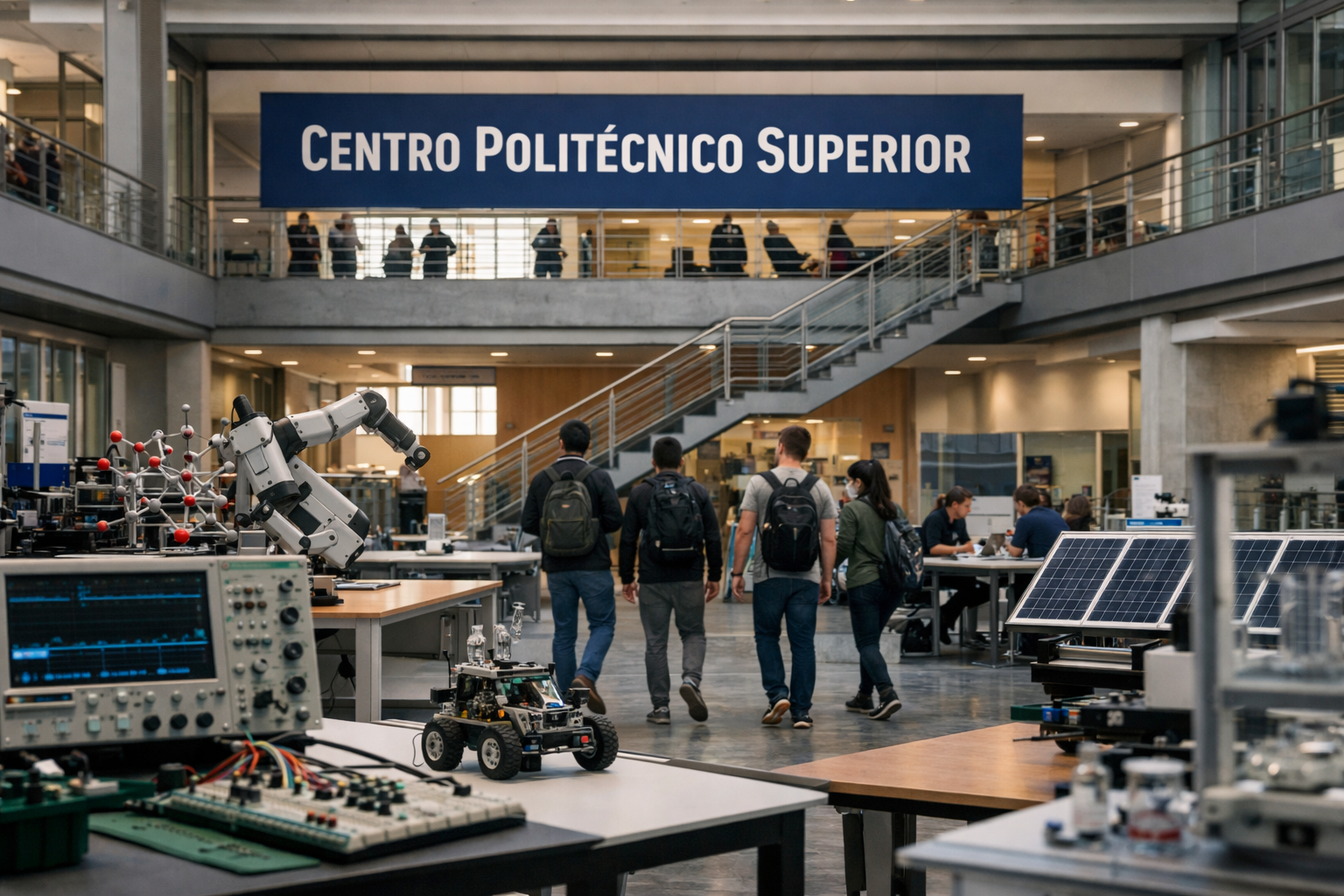
The Centro Politécnico Superior is entering a phase that feels less like a routine institutional update and more like a structural shift. Long known for its rigorous engineering and technical programs, the school is now reshaping how it approaches digital infrastructure, research integration, and industry collaboration. For students already navigating demanding coursework, this isn’t just administrative news — it directly affects how they learn, collaborate, and prepare for a competitive tech landscape.
Over the past year, leadership at Centro Politécnico Superior has quietly accelerated several modernization efforts. These include curriculum recalibration, expanded partnerships with technology firms, and new investment in research labs tied to emerging fields such as artificial intelligence, sustainable engineering, and cybersecurity. It’s not flashy. There are no grand marketing slogans attached. But for those paying attention, the direction is clear.
This is an institution that understands the pace of change outside its campus walls.
Why This Shift Matters Now
To understand why these updates are significant, it helps to look at the broader academic ecosystem in Spain. The Centro Politécnico Superior operates within the framework of the University of Zaragoza, one of the country’s established public universities. Historically, engineering education in Spain has been theory-heavy, deeply technical, and academically robust. What it hasn’t always been is agile.
The global technology market no longer waits for five-year curriculum cycles. Fields like data science, robotics, and energy systems evolve in real time. Employers are increasingly hiring based not only on theoretical mastery but also on hands-on experience with current tools.
For students at Centro Politécnico Superior, the modernization effort signals something important: the institution is adapting to match that speed.
And adaptation, in technical education, can make or break graduate outcomes.
A Curriculum Rebuilt for Emerging Tech
Engineering With Applied Focus
One of the most visible changes at Centro Politécnico Superior is the recalibration of engineering programs to integrate applied modules earlier in the degree path. Instead of waiting until final-year projects to work on real-world simulations, students now encounter practical lab-based assignments in earlier semesters.
This includes expanded computational modeling in civil engineering, embedded systems prototyping in electronics tracks, and real-time data analysis labs in industrial engineering streams.
It’s a subtle but impactful shift. Students aren’t just studying systems anymore — they’re building them sooner.
AI and Data Integration Across Disciplines
Artificial intelligence is no longer confined to a specialized elective. At Centro Politécnico Superior, AI modules are being embedded into multiple engineering degrees. Mechanical engineering students are now exposed to predictive maintenance modeling. Telecommunications students work with machine learning-driven network optimization.
This cross-disciplinary integration mirrors what’s happening in industry. AI isn’t its own silo. It’s a layer across everything.
From a student perspective, this reduces the risk of graduating with skills that feel outdated. Exposure to modern tools during training builds familiarity, and familiarity translates into confidence when entering the workforce.
Research Infrastructure Upgrades
New Lab Investments
Behind the scenes, the Centro Politécnico Superior has expanded its research facilities in sustainable energy systems and advanced materials science. While public institutions often move slowly in this area, recent funding initiatives have accelerated lab upgrades.
Advanced simulation environments, high-performance computing access, and updated robotics platforms are now central to ongoing research projects. These aren’t cosmetic changes. They determine whether faculty can compete in European research grants and whether doctoral candidates can publish at an international level.
Industry Collaboration
Another key development is stronger collaboration with private-sector partners. Rather than operating as an isolated academic bubble, the Centro Politécnico Superior is building structured internship pipelines and co-funded research initiatives.
For students, this means exposure to real engineering constraints — budget, deadlines, scalability — long before graduation. In practical terms, graduates leave not only with theoretical knowledge but with project experience that feels grounded.
This alignment between academia and industry narrows the gap many engineering graduates face when transitioning into full-time roles.
Student Experience: What Changes Day to Day
From the outside, institutional reforms can seem abstract. But inside classrooms and labs, the impact is tangible.
Workloads are becoming more project-oriented. Group collaboration has increased, reflecting how engineering teams operate in professional environments. There is greater emphasis on version control systems, collaborative design platforms, and data-driven reporting.
Students at Centro Politécnico Superior now encounter learning environments that resemble startup labs or industrial R&D floors more than traditional lecture halls.
This shift brings both opportunity and pressure. Project-based learning demands time management, teamwork, and technical precision. It’s less forgiving than memorization-heavy exams. But it’s also more aligned with how modern engineers actually work.
For motivated students, the change feels empowering. For others, it requires adjustment.
Positioning Within Spain’s Technical Education Landscape
Spain has several respected technical institutions, but the Centro Politécnico Superior holds a distinctive position due to its integration within the University of Zaragoza’s broader academic ecosystem.
That integration allows interdisciplinary collaboration with economics, environmental sciences, and applied mathematics departments. As engineering problems become more complex — think renewable energy grids or smart urban planning — cross-department cooperation is increasingly valuable.
The modernization effort reinforces that collaborative advantage. By aligning engineering programs with data science, sustainability, and digital infrastructure initiatives across the university, the Centro Politécnico Superior strengthens its long-term relevance.
It’s not about chasing trends. It’s about ensuring that graduates remain competitive within Europe’s evolving technical market.
Faculty Direction and Long-Term Vision
Faculty leadership at Centro Politécnico Superior appears focused on three pillars: digital transformation, sustainability, and research competitiveness.
Digital transformation isn’t limited to course content. Administrative systems, digital resource platforms, and hybrid learning tools have been upgraded to streamline communication and access to materials. While the pandemic accelerated digital adoption globally, the institution is now refining those tools rather than simply maintaining them.
Sustainability has become another defining theme. Energy efficiency research, circular manufacturing processes, and smart infrastructure projects are gaining prominence. This reflects broader European Union funding priorities, but it also mirrors student interest in environmentally responsible engineering careers.
Research competitiveness remains a long-term objective. By strengthening laboratory capacity and fostering partnerships, the Centro Politécnico Superior aims to increase its presence in international publications and collaborative European projects.
For students considering postgraduate study, this direction enhances the institution’s academic credibility.
Challenges Ahead
No modernization effort is frictionless.
Balancing academic rigor with applied learning requires careful calibration. If project loads increase too rapidly without sufficient support, student stress can rise. Additionally, integrating AI and digital tools across disciplines demands continuous faculty retraining.
There’s also the financial reality. Public institutions must operate within funding constraints, and sustained investment will determine whether these reforms maintain momentum.
Still, the trajectory appears stable rather than experimental. The Centro Politécnico Superior isn’t making abrupt, headline-driven changes. It’s executing incremental, strategic upgrades.
That steadiness matters.
Broader Implications for Technical Education
The developments at Centro Politécnico Superior reflect a wider shift in European engineering education. Institutions can no longer rely solely on historical reputation. They must demonstrate adaptability.
By embedding AI across disciplines, investing in research labs, and strengthening industry ties, the school aligns itself with where engineering careers are heading — automation, sustainability, and data-driven optimization.
For current students, this increases employability. For prospective students, it enhances the institution’s appeal. And for Spain’s technical ecosystem, it signals a willingness to evolve.
Conclusion
The Centro Politécnico Superior is not undergoing a flashy rebrand or radical overhaul. Instead, it is executing a thoughtful modernization strategy rooted in practical need. Curriculum updates emphasize applied learning and AI integration. Research facilities are being upgraded to compete internationally. Industry partnerships are becoming more structured and meaningful.
For students, the changes translate into a more demanding but more relevant educational experience. For faculty, they offer renewed research opportunities. For the broader University of Zaragoza framework, they strengthen technical credibility.
Ultimately, the transformation of Centro Politécnico Superior represents something straightforward yet significant: an engineering institution aligning itself with the realities of contemporary technology. Not dramatically. Not noisily. But deliberately — and with clear intent for the future.

One thought on “Centro Politécnico Superior: A Technical Institution Stepping Into a Digital Era”