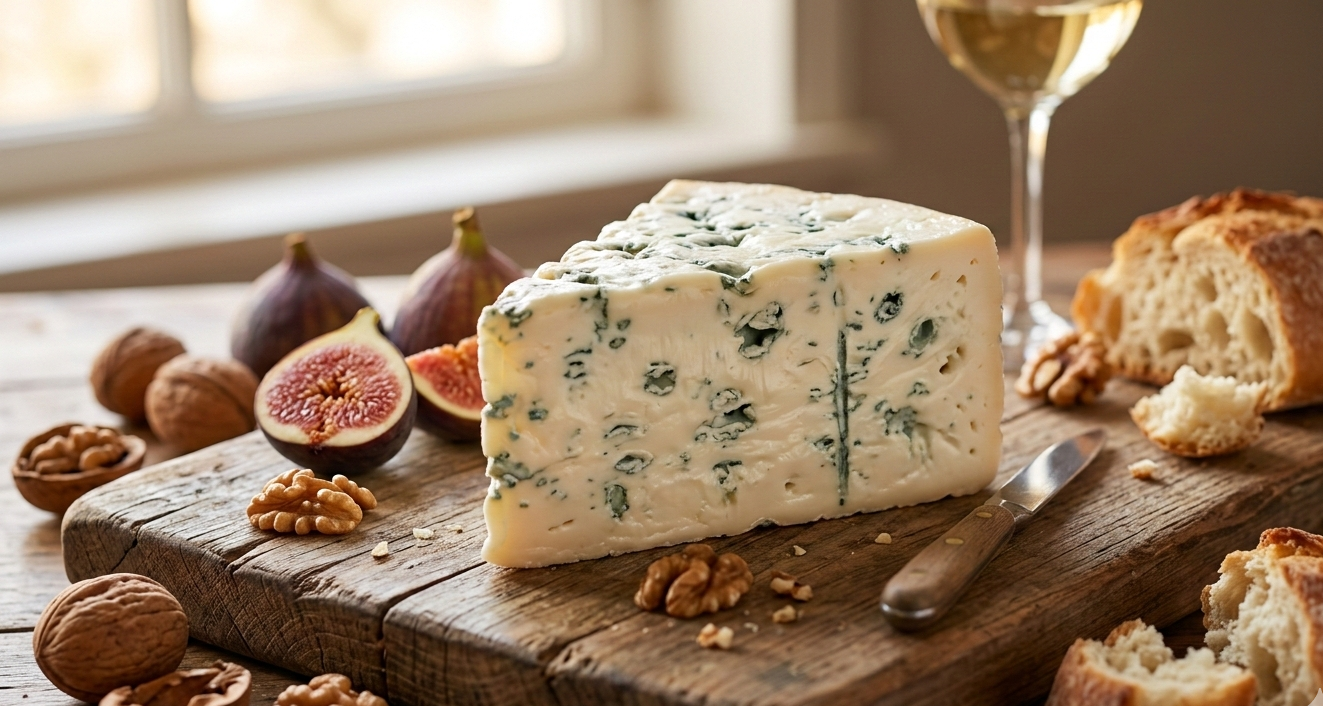
Masgonzola is a cheese that’s started showing up in artisanal shops, chef menus, and curious cookbooks — not because it’s an age‑old PDO staple like Parmigiano‑Reggiano or Roquefort, but because it strikes a rare balance that many cheese lovers crave. It combines the velvety richness of mascarpone with the mellow blue‑veined character of Gorgonzola in a way that feels both familiar and fresh.
At its best, masgonzola is soft, spreadable, and aromatic — creamy without being cloying, subtly tangy but never aggressive. Whether you’re approaching blue cheese for the first time or are already a fan of its complex cousins, this hybrid style rewards attention with nuance.
What Exactly Is Masgonzola?
Masgonzola isn’t a traditional Italian designation you’ll find on the EU’s list of protected cheeses, nor does it come from a specific village with centuries of documented heritage. Instead, it’s a term used by cheesemakers and gourmands to describe a style: a blend of mascarpone — a dense, buttery, double‑cream cheese — with elements of Gorgonzola Dolce, the softer, sweeter variant of the classic Italian blue.
Think of mascarpone as the soft, milky canvas and Gorgonzola as the bold blue brushstroke. Together, they create a cheese that carries the creaminess of one and the character of the other, without either side dominating.
Masgonzola’s name itself reflects this hybrid heritage: “Mas” is a nod to mascarpone’s creamy heart, and “gonzola” references the blue‑veined lineage it draws from.
A Quick Look at the Cheese’s Profile
Texture and Appearance
Masgonzola is often described as silky and spreadable at room temperature, dense yet yielding to a knife or spoon. Visually, it presents striking marbling — pale ivory cream speckled with soft blue veins — that makes it an attractive centerpiece on any cheese board.
Flavor Journey
On the palate, the experience is layered. At first, you’ll notice the gentle sweetness and richness typical of mascarpone. This gives way to a soft blue‑cheese tang — less sharp than aged blues but still distinct. The finish tends to linger with mild earthiness and a satisfying balance of savory and creamy notes.
The overall impression isn’t about punchy sharpness; it’s about harmony. For many people who find traditional blue cheeses too bold, masgonzola offers a more approachable entry point.
How Masgonzola Is Made
Because masgonzola isn’t bound by strict regional laws, production methods vary. Generally, artisanal makers start with high‑quality cow’s milk to craft mascarpone and layer or fold it with young Gorgonzola Dolce. This blend keeps the marbled texture intact while allowing the flavors to meld — sometimes with a short aging period, other times ready to enjoy fresh.
The process isn’t standardized, which means the character of masgonzola can shift slightly from producer to producer. Some makers lean into creaminess with more mascarpone, others let the blue cheese character play a bit stronger. But the core principle remains: marry cream with tang in a cohesive wheel.
Why Masgonzola Matters in Today’s Cheese Scene
What’s fascinating about masgonzola isn’t just its flavor but its place in a broader culinary conversation. There’s a growing interest in cheeses that bridge traditional categories without being mere imitations. Masgonzola fits that niche: it respects Italian cheese heritage while offering a modern twist that reflects experimentation and consumer curiosity.
Unlike long‑established cheeses protected by geographic rules, masgonzola thrives on creativity. That’s part of its charm — artisans aren’t constrained by centuries of specification, which opens the door to subtle adaptations in milk blend, aging, or texture.
Pairing Masgonzola: Practical Ideas
The balanced nature of masgonzola makes it surprisingly versatile. Here are ways to enjoy it beyond just placing it on a board:
Cheese Boards and Appetizers
Let masgonzola shine alongside fresh or dried fruits such as pears, figs, or grapes. A drizzle of honey or a dollop of fig jam can accentuate its mild sweetness, while toasted nuts like walnuts or almonds add textural contrast. Simple crackers or crusty baguette slices are all you need to complete the spread.
Pasta and Risotto
Masgonzola melts beautifully into hot pasta or risotto, forming a sauce that’s rich and velvety without overpowering other ingredients. Try it with wild mushrooms or roasted squash for a dish that feels both elegant and comforting.
With Meat and Salads
Thin slices or crumbles of masgonzola can elevate salads — especially those with bitter greens like arugula or endive — by introducing creamy richness. It also pairs well with grilled chicken or steak; a spoonful warmed into a light sauce can enrich a simple meat dish.
Unconventional Uses
Some chefs even incorporate masgonzola into sweet contexts — with honey‑poached pears or alongside dessert wines — highlighting its gentle tang against sweet edges. These pairings aren’t traditional, but they work because of the cheese’s inherent balance.
Storage and Serving Tips
Like many soft cheeses, masgonzola shows its best side when served at room temperature. Take it out of the fridge about 30–45 minutes before eating to let its flavor and texture bloom.
For storage, wrap it in parchment or wax paper and place it in an airtight container in the coldest part of the fridge. Avoid freezing — this can compromise the delicate texture.
Masgonzola in Context: How It Compares
Traditional blue cheeses like Gorgonzola Piccante, Roquefort, or Stilton tend to be sharper, saltier, and more assertive. In contrast, masgonzola leans into smoothness and milder tang — a texture and flavor profile that can bridge the gap between approachable and gourmet.
It’s not that one is better than the other; rather, they serve different purposes. Masgonzola is about balance, making blue cheese experiences accessible without diluting their essence.
FAQs About Masgonzola
Is masgonzola the same as Gorgonzola?
No. Masgonzola blends mascarpone with Gorgonzola (often the milder dolce style), whereas Gorgonzola alone is a specific Italian blue cheese with its own protected identity.
Can beginners enjoy masgonzola?
Yes. Its mellow tang and creamy texture make it a gentle introduction for people who find traditional blue cheeses too sharp.
How should I serve masgonzola for best flavor?
Let it come to room temperature before eating — this softens the texture and allows the aromatics to develop more fully.
Does it pair well with wine?
Absolutely. Sweet wines like Moscato or dessert wines contrast the tang beautifully, while medium reds such as Barbera can complement its richness.
Is masgonzola widely available?
Not everywhere. You’re most likely to find it in specialty cheese shops, Italian delicatessens, or online gourmet markets.
Masgonzola may still be niche, but for anyone willing to explore beyond familiar cheeses, it offers a rewarding blend of comfort and complexity — a reminder that tradition and innovation can coexist deliciously.

One thought on “Masgonzola: The Creamy, Balanced Blue Cheese You Might Not Know”