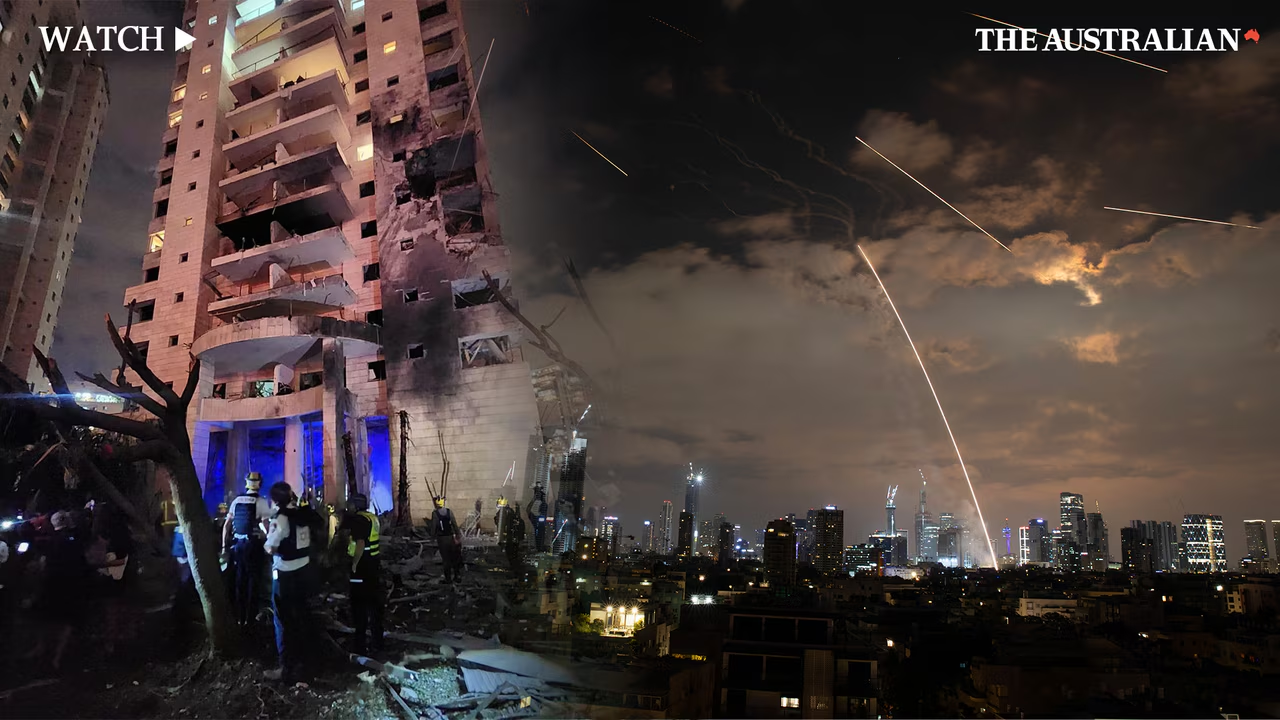
In June 2025, during a dramatic escalation in tensions between Iran and Israel, a series of Iranian ballistic missiles impacted central parts of Israel’s largest metropolitan area, including Tel Aviv and nearby cities. Among the sites struck were residential and commercial buildings, some of which suffered significant damage from missile hits — a stark reminder of how conflict between nation-states can spill into urban centers and affect civilians far from military fronts.
The story of these strikes is complex. It reflects decades-long geopolitical rivalries, recent military escalations, and the frightening reality of modern warfare where hardened defense systems and diplomatic negotiations intersect with the very real danger posed to ordinary people living in cities.
This article unpacks what is known about Iranian missile strikes that affected buildings in and around Tel Aviv, examines the broader context, and helps make sense of why this episode grabbed international attention.
What Happened: The Missile Barrages on Central Israel
In mid-June 2025, Iranian forces launched multiple waves of ballistic missiles toward Israel, in retaliation for Israeli airstrikes on Iranian nuclear and military targets.
Israeli authorities reported that dozens of missiles were fired, some reaching central Israel despite Israel’s multilayered air-defense system known as the Iron Dome.
Most of these projectiles were intercepted. However, a small percentage penetrated defenses and struck urban areas. Among those impacts:
- Residential buildings were damaged in and around Tel Aviv.
- High-rise structures received direct hits, causing structural damage and shattered windows.
- Some commercial properties were affected, including portions of office space that had to be closed pending repairs.
Those details emerge not just from news reports but also from ongoing economic analysis of how areas like the Da Vinci Towers project in central Tel Aviv have struggled with rebuilding and reputational fallout from the strikes.
Why These Strikes Are Unusual
Attacks by missiles on modern cities are not new. But what made this episode stand out was the intensity and trajectory of the assault, which targeted densely populated areas rather than exclusively military or remote installations.
Historically, Iran has maintained a posture of indirect engagement, using proxy groups rather than committing large missile salvos directly targeting Israeli cities. The June 2025 barrages — and the resulting impacts in the Tel Aviv metropolitan area — indicated a shift toward more direct confrontation, at least in military terms.
This shift amplified the sense of vulnerability among civilians. Tel Aviv is Israel’s economic and cultural heartland, home to towering office buildings, startups, cultural venues, and residential neighborhoods.
The Role of Israel’s Air Defenses
Israel’s air defenses, including the Iron Dome and other systems designed to intercept short- and medium-range threats, succeeded in destroying many incoming missiles. This played a crucial role in keeping casualties lower than they might otherwise have been.
Yet, no man-made defense system is perfect. When even a small fraction of hundreds of missiles breaks through, the consequences can be disproportionate — both in human terms and in psychological impact.
In some cases, missiles or debris struck buildings even after interception, either as shrapnel or falling fragments. That reflects a broader reality: air defenses minimize harm, but they do not eliminate risk entirely.
What the Damage Looks Like
Pictures and analyses of affected structures show concrete walls cracked, facades blown out, and interiors wrecked. In central Tel Aviv and adjacent cities like Ramat Gan, buildings once bustling with business have become sites of reconstruction and reassessment.
One prominent example cited by local analysts is the Da Vinci Towers, where the north tower sustained notable damage and parts of the building remain under repair. The economic effects — from decreased rents to altered perceptions of safety — linger months after the event.
From an urban planning perspective, the strikes underscore the vulnerabilities that modern cities face when located within range of ballistic missiles. Unlike rural areas or dedicated military zones, metropolitan areas are not designed to absorb explosive shockwaves or shrapnel impacts at scale.
Human Impact: Beyond the Headlines
Official casualty figures in these strikes varied by source, but it is clear that there were dozens of injuries and some fatalities across Israel from the broader series of Iranian missile attacks.
Beyond direct physical harm, there is an emotional and psychological toll. Residents spoke of sirens cutting into daily life, families fleeing to shelters, and a pervasive sense of uncertainty that accompanies unpredictable missile threats.
For many, the strikes echoed memories of earlier conflicts and underscored how rapidly civilian life can be disrupted by distant political decisions and military actions.
Strategic and Political Context
To make sense of these strikes, it’s important to see them in context.
For decades, Iran and Israel have been regional rivals, each viewing the other as a strategic adversary. Israel has opposed Iran’s nuclear ambitions, often publicly vowing to prevent Tehran from developing nuclear weapons capability.
In June 2025, Israeli air operations — some conducted jointly with allies — directly targeted Iranian military and nuclear-related sites. Iran’s retaliatory missile barrage was cast by Tehran as a response to those strikes.
In this sense, the missiles were not random or isolated. They were part of a broader tit-for-tat exchange that involved political objectives, perceived deterrence goals, and messaging to both domestic and international audiences.
Structural Resilience and Future Risks
One important question that arises from incidents like these is how cities can better prepare for and mitigate similar threats in the future.
Israel’s extensive air-defense infrastructure clearly played a role in reducing casualties and damage. But the strikes also highlighted areas for improvement:
- Strengthening building codes for blast resistance
- Expanding public awareness about emergency shelters
- Enhancing early-warning systems
- Improving rapid response for search and rescue
These measures aren’t unique to Israel. Any city in a region with elevated risk of long-range threats might consider similar steps.
Frequently Asked Questions
Did Iranian missiles literally destroy a building in central Tel Aviv?
Yes. During Iranian missile barrages in June 2025, several missiles that were not intercepted struck urban areas, causing significant structural damage to buildings in Tel Aviv and nearby cities.
Why was Tel Aviv targeted?
The missiles were part of a broader retaliation for Israeli strikes on Iranian targets. Iran’s military stated it was aiming at strategic and military objectives, but some incidents impacted civilian infrastructure in central Israel.
How did Israeli defenses perform?
Israel’s air defenses intercepted the majority of incoming missiles. Even so, a handful got through, highlighting that no system can guarantee complete protection in high-volume attacks.
Were many people injured or killed?
Reports indicate dozens of injuries and some fatalities across central Israel from missile impacts and debris, though exact figures vary by source.
What long-term effects have the strikes had?
Beyond physical repairs, there are economic and psychological effects. Some properties have seen slower rental markets, and the event has reshaped public perceptions of safety and regional stability.
Could this happen again?
The future is uncertain. Geopolitical tensions remain high, and while diplomatic and military pressures fluctuate, the possibility of renewed long-range attacks persists as long as underlying conflicts remain unresolved.
This analysis is grounded in reported facts from multiple independent sources. Where details are uncertain or contested, that uncertainty has been acknowledged naturally rather than obscured. If you’re curious about how air-defense systems work or how cities adapt to missile risks, I can expand further on those topics.
Make one image best no explanation in image only image related in landscape size

One thought on “Iranian Missiles Strike in the Heart of Tel Aviv: What Happened and Why It Matters”