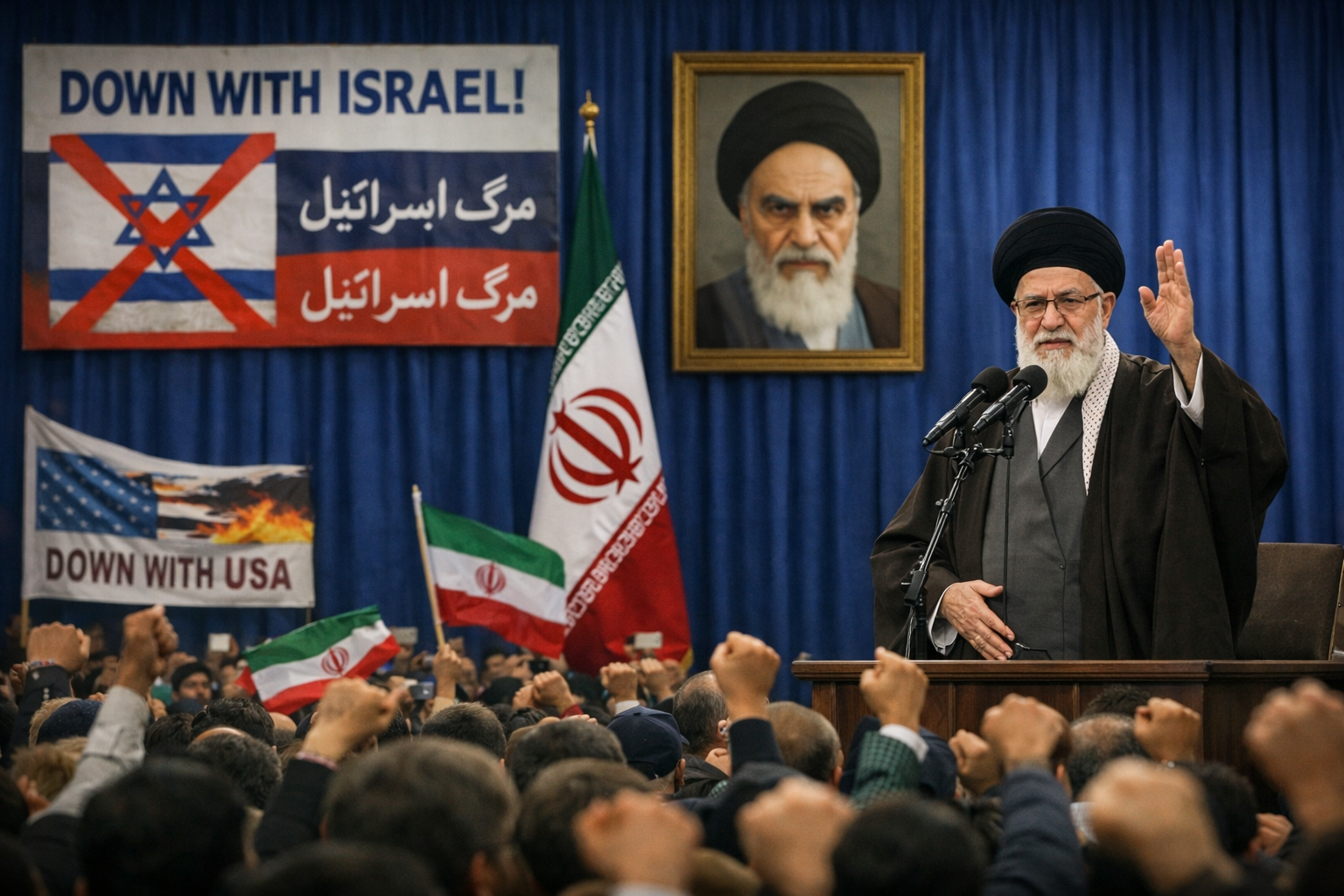
In recent weeks, Iranian officials have strongly rejected circulating claims suggesting that Ayatollah Khamenei is dead or incapacitated, describing such reports as part of a coordinated psychological campaign led by Israel and the United States. According to Tehran, Supreme Leader Ayatollah Ali Khamenei remains fully active and continues to direct national policy during a period of heightened regional tension.
The controversy highlights how modern geopolitical conflicts increasingly unfold not only through diplomacy or military pressure, but also through information warfare — where perception can be as influential as reality itself.
Understanding the Claims Around Ayatollah Khamenei’s Alleged Death
Rumors regarding the health or death of political leaders are not new, particularly in countries where leadership structures are tightly controlled and official communication is limited. Over the past months, social media platforms and some foreign outlets circulated unverified reports claiming that Iran’s Supreme Leader had either died or lost operational authority.
Iranian state institutions quickly responded, labeling these narratives as fabricated.
Officials argued that hostile governments — particularly Israel and the United States — were attempting to create uncertainty within Iranian society and weaken confidence in leadership during sensitive geopolitical developments.
From Tehran’s perspective, such rumors serve two main purposes:
- Creating internal anxiety among citizens
- Encouraging speculation about political succession or instability
In highly centralized political systems, even minor uncertainty around leadership can trigger broader strategic consequences.
Iran’s Response: “Leading From the Front”
Iranian media outlets have repeatedly shown footage and official statements indicating that Ayatollah Khamenei continues to chair meetings, issue directives, and communicate with military and political leadership.
Government representatives insist that he remains directly involved in decision-making, particularly regarding regional security policies and diplomatic positioning.
The phrase “leading from the front,” frequently used by Iranian officials, carries symbolic importance. It suggests continuity — a critical message during moments when external pressure intensifies.
Iran’s leadership structure places enormous authority in the office of the Supreme Leader. Any suggestion of absence or weakness naturally becomes politically sensitive.
Why Israel and the United States Are Being Accused
Iran’s accusations toward Israel and the United States must be understood within a broader history of rivalry and mistrust.
Relations between Iran and Israel have been openly hostile for decades, marked by proxy conflicts, cyber operations, and competing regional alliances. Meanwhile, tensions between Tehran and the United States remain shaped by sanctions, nuclear negotiations, and strategic confrontation.
Iranian analysts argue that spreading rumors about leadership instability fits into what they describe as “hybrid warfare,” combining:
- Media influence
- Psychological operations
- Economic pressure
- Diplomatic isolation
Whether these accusations are accurate or politically motivated depends largely on interpretation — and access to independently verified information remains limited.
The Role of Information Warfare in Modern Conflicts
The debate surrounding Khamenei’s alleged death reflects a broader global trend.
Today’s geopolitical struggles rarely occur only on battlefields. Instead, narratives circulate rapidly through social platforms, unofficial news channels, and partisan media ecosystems.
False or exaggerated reports can travel globally within minutes, often reaching audiences faster than official corrections.
Examples from recent conflicts show similar patterns:
- Rumors about leadership changes during wartime
- Misleading images presented as real-time events
- Health speculation targeting prominent political figures
Such tactics aim less at proving facts and more at influencing public perception.
Even when later disproven, the initial doubt often lingers.
Leadership Stability and Iran’s Political System
To understand why these rumors attract attention, it helps to examine Iran’s governance model.
The Supreme Leader occupies the highest constitutional authority in Iran, overseeing:
- Armed forces command
- Judicial leadership
- Strategic foreign policy direction
- Religious legitimacy within the state framework
Unlike elected officials whose roles rotate regularly, the Supreme Leader represents long-term continuity.
Because Ayatollah Ali Khamenei has held this position since 1989, discussions about his health inevitably connect to questions about succession — an issue Iran rarely addresses publicly.
This silence often creates an information vacuum, where speculation thrives.
How Social Media Amplifies Political Rumors
In previous decades, rumors about world leaders moved slowly. Verification processes filtered much of the misinformation before it reached global audiences.
That dynamic has changed dramatically.
Platforms driven by algorithmic engagement tend to prioritize emotionally charged or sensational content. Claims about a powerful leader’s death naturally attract attention, shares, and commentary — regardless of accuracy.
Once viral, corrections struggle to achieve the same reach.
Observers note that misinformation does not always require centralized coordination. Sometimes fragmented speculation spreads organically, later becoming entangled in geopolitical narratives.
Regional Tensions Add Fuel to Speculation
The Middle East remains one of the world’s most strategically sensitive regions. Military developments, proxy conflicts, and diplomatic disputes often unfold simultaneously.
During periods of tension involving Iran, Israel, or U.S. forces, rumors about leadership stability gain additional traction because audiences expect dramatic developments.
Political uncertainty, real or perceived, can influence:
- Oil markets
- Military calculations
- Diplomatic negotiations
- Domestic morale
For this reason, governments tend to respond quickly to leadership-related rumors — even when they appear implausible.
Independent Verification Challenges
One important reality often overlooked is the difficulty of independently confirming leadership health in closed political environments.
International journalists and external observers have limited direct access to Iranian leadership circles. As a result, analysts must rely on:
- Official appearances
- Recorded speeches
- Government communications
- Intelligence assessments
Each source carries its own limitations.
This uncertainty allows competing narratives to coexist — one promoted by Iranian authorities and another circulating among critics or adversaries.
Political Messaging and Strategic Timing
Timing plays a crucial role in how such rumors emerge.
Claims about leadership instability frequently appear during moments such as:
- Military escalation
- Sanctions negotiations
- Diplomatic deadlock
- Domestic protests
Some analysts believe these narratives attempt to signal weakness to opponents or encourage internal political pressure.
Others argue that rumor cycles simply reflect heightened global attention rather than organized campaigns.
Reality often lies somewhere between deliberate strategy and uncontrolled information flow.
Public Perception Inside Iran
Within Iran itself, reactions appear mixed.
Supporters of the government largely accept official reassurances that the Supreme Leader remains active. Meanwhile, skeptics — particularly among younger or politically critical groups — may view state messaging cautiously.
This divide mirrors broader global trends where trust in official information varies widely across populations.
Leadership visibility therefore becomes politically meaningful. Public appearances, speeches, and meetings serve not only administrative purposes but symbolic ones as well.
The Broader Implications for Global Politics
The controversy surrounding reports of Khamenei’s death illustrates a deeper shift in international relations.
Modern conflicts increasingly revolve around narratives:
- Who controls information
- Who shapes perception
- Who defines credibility
Governments now invest heavily in communication strategies alongside traditional defense policies.
Rumors about leadership health may seem minor at first glance, yet they can influence diplomatic posture, market stability, and regional confidence.
In that sense, information itself has become a strategic asset.
FAQ: Common Questions People Are Asking
Is there confirmed evidence that Ayatollah Khamenei has died?
No verified international or official confirmation supports claims of his death. Iranian authorities maintain that he remains active in leadership duties.
Why do rumors about political leaders’ deaths spread so quickly?
Leadership rumors attract attention and emotional reactions, making them highly shareable online, especially during political crises.
Has Iran shown proof that Khamenei is still leading?
Iranian state media has released footage and reports showing meetings and public messages attributed to him, though independent verification remains limited.
Why would foreign countries spread such rumors?
Iranian officials believe it weakens public confidence and creates uncertainty, though critics argue rumors can also arise without organized intent.
Does leadership uncertainty affect regional stability?
Yes. Even speculation can influence diplomatic decisions, market reactions, and military calculations in sensitive regions.
Political rumors often reveal as much about global tensions as they do about the individuals involved. Whether viewed as propaganda, misinformation, or ordinary speculation, the debate surrounding Ayatollah Khamenei underscores how leadership narratives now sit at the center of modern geopolitical competition.

One thought on “Ayatollah Khamenei Is Leading From the Front, Israel & US Spreading False News About Death: Iran”