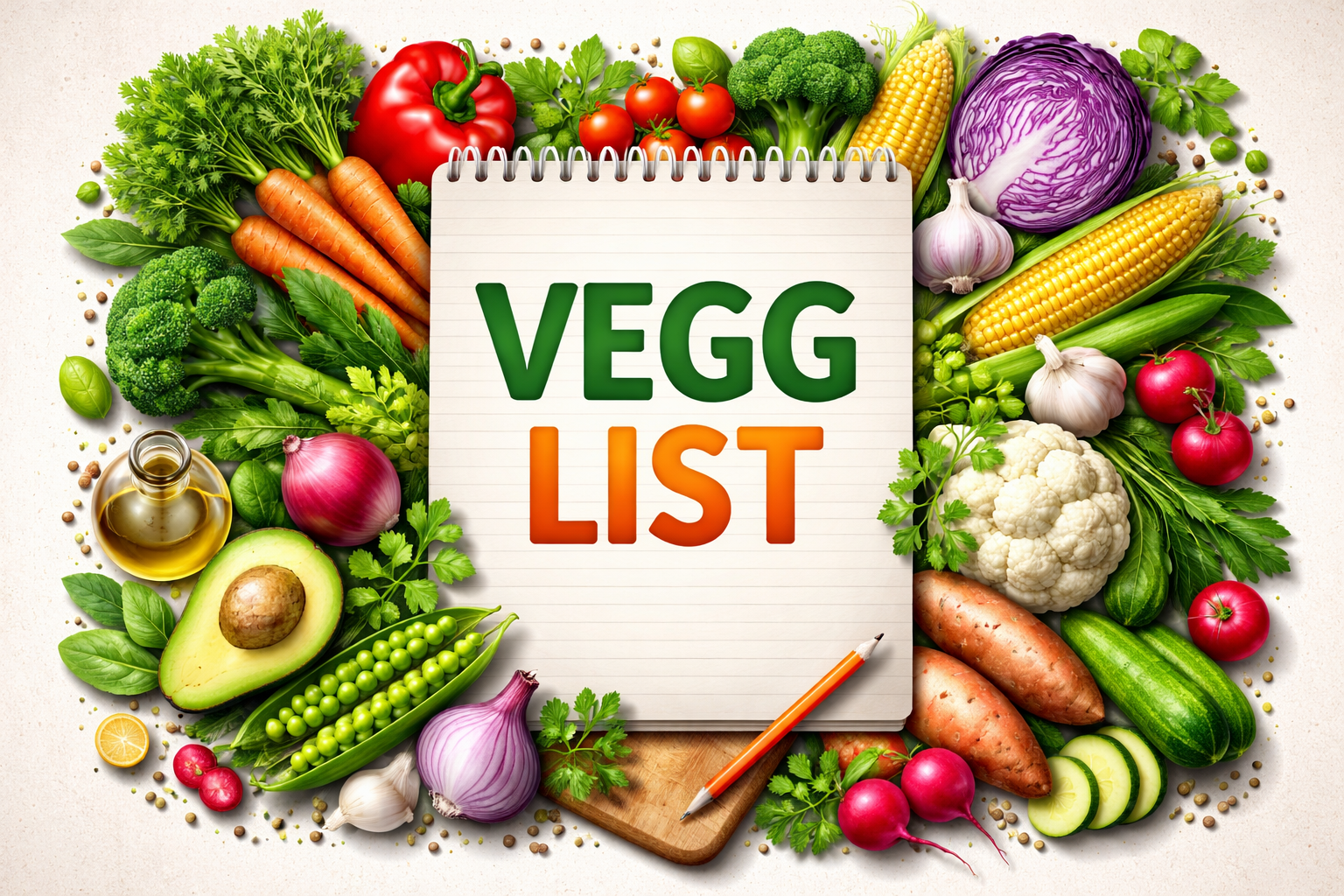
A vegg list is more than a collection of vegetable names. For many people, it becomes a quiet system that shapes how they shop, cook, eat, and even save money. When vegetables are understood properly—by type, use, and availability—they stop feeling confusing or repetitive.
This guide approaches the vegg list from a real-world perspective. It focuses on how vegetables actually show up in kitchens, markets, and meals, not just how they appear on charts.
Why a Vegg List Is Useful in Everyday Cooking
Most people don’t struggle with eating vegetables. They struggle with choosing them.
A clear vegg list removes decision fatigue. Instead of standing in front of produce shelves unsure of what to buy, you already know which vegetables fit your habits, recipes, and season.
A good vegg list helps with:
- Faster grocery shopping
- Balanced meal planning
- Reducing food waste
- Adding variety without stress
It works best when it reflects real behavior, not ideal diets.
Vegg List Based on How Vegetables Are Used
Rather than grouping vegetables by biology, this approach organizes them by how people actually cook and eat them.
Vegetables Commonly Used as a Base
These vegetables quietly support most dishes without being the main focus.
Examples:
- Onion
- Garlic
- Ginger
- Leeks
They build flavor and aroma. Even small changes here can noticeably affect taste.
Vegetables Used as the Main Component
These are the vegetables that usually define the dish.
Examples:
- Potato
- Eggplant
- Cauliflower
- Pumpkin
- Cabbage
They add volume, texture, and satisfaction. Meals often feel incomplete without them.
Light Vegetables for Balance and Freshness
These vegetables are used to add contrast rather than fullness.
Examples:
- Cucumber
- Tomato
- Lettuce
- Radish
They work well raw or lightly cooked and help prevent meals from feeling heavy.
Vegg List by Texture and Cooking Time
Understanding texture saves meals from overcooking or poor combinations.
Quick-Cooking Vegetables
- Spinach
- Zucchini
- Mushrooms
- Green beans
These should be added late in cooking. Long heat exposure dulls their flavor and structure.
Slow-Cooking Vegetables
- Carrot
- Potato
- Beetroot
- Turnip
They need time to soften and develop sweetness, making them suitable for stews and roasting.
Seasonal Vegg List and Why It Matters
Seasonality affects price, taste, and freshness more than most people realize.
Warm-Season Vegetables
- Okra
- Bottle gourd
- Bitter gourd
- Tomatoes
These vegetables contain more water and are easier to digest in hot weather.
Cool-Season Vegetables
- Spinach
- Peas
- Cauliflower
- Broccoli
They are denser and work well in warm, cooked meals during colder months.
Choosing seasonal vegetables naturally improves both flavor and value.
Vegg List for Simple Home Meals
Not every vegetable suits everyday cooking. Some are better reserved for special dishes.
Reliable Everyday Vegetables
- Potato
- Onion
- Tomato
- Carrot
- Cabbage
These store well, cook easily, and adapt to many cuisines.
Occasional or Specialty Vegetables
- Asparagus
- Artichoke
- Brussels sprouts
- Zucchini flowers
They add interest but aren’t necessary for daily meals.
A realistic vegg list includes both, but leans heavily on what you actually use.
Vegg List for Nutrition Without Obsession
People often look for the “healthiest” vegetables, but nutrition works through combination, not extremes.
- Green vegetables support digestion and micronutrients
- Orange and red vegetables add natural pigments and variety
- Root vegetables provide energy and fullness
- Pod vegetables contribute plant protein
A balanced vegg list includes multiple colors and textures over time, not all in one meal.
Common Misunderstandings About Vegg Lists
Many food myths come from oversimplification.
- Avoiding potatoes due to calories ignores portion and preparation
- Believing raw vegetables are always better overlooks digestibility
- Repeating the same vegetables limits nutrient diversity
A flexible vegg list avoids rigid rules and adapts to lifestyle.
How to Create a Vegg List That Actually Works
Instead of copying online lists, build one around your routine.
Start with these questions:
- Which vegetables are easily available where I live?
- Which ones do I already cook well?
- Which vegetables spoil too often in my kitchen?
Refine your list every few weeks. Practical lists evolve.
Storage Awareness: The Missing Part of Most Vegg Lists
A vegg list becomes more useful when storage is considered.
- Leafy vegetables need airflow and low moisture
- Root vegetables prefer cool, dark places
- Tomatoes lose flavor when refrigerated
- Onions and garlic need dry conditions
Better storage habits extend freshness and reduce waste.
Vegg List and Cultural Cooking Styles
Vegetable choices often reflect culture more than health trends.
- South Asian cooking favors gourds, okra, and leafy greens
- Mediterranean meals rely on tomatoes, eggplants, and peppers
- East Asian dishes highlight cabbage varieties and quick-cooking greens
A vegg list becomes richer when it borrows across cuisines.
FAQ: Real Questions About Vegg Lists
What does “vegg list” actually mean?
It’s a practical list of vegetables used for shopping, cooking, or planning meals, not a scientific classification.
Is a vegg list the same everywhere?
No. Climate, culture, and availability heavily influence which vegetables appear on a typical vegg list.
How long should a personal vegg list be?
Most people manage well with 20–30 vegetables they rotate regularly.
Are frozen vegetables acceptable in a vegg list?
Yes. They are convenient, long-lasting, and often nutritionally comparable to fresh options.
Can a vegg list improve eating habits?
Indirectly. It simplifies choices, which makes consistent, balanced eating easier over time.
Should fruits like tomatoes be included?
In cooking, yes. Vegg lists usually follow kitchen usage, not botanical definitions.
A thoughtful vegg list is not about restriction or perfection. It’s a quiet tool that brings clarity to everyday food choices. When vegetables feel familiar instead of overwhelming, better eating becomes a habit rather than a goal.
